




Last Updated:
November 4th, 2026
If you’ve been prescribed metronidazole and you’re wondering whether a drink is off the table, the short answer is yes. For years, doctors and scientists agreed that metronidazole and alcohol react in a specific, unpleasant way and that they shouldn’t be mixed. There is some newer evidence which suggests that mixing metronidazole and alcohol may not be as big a problem as first thought, but while more research is done, it is still generally advised against.
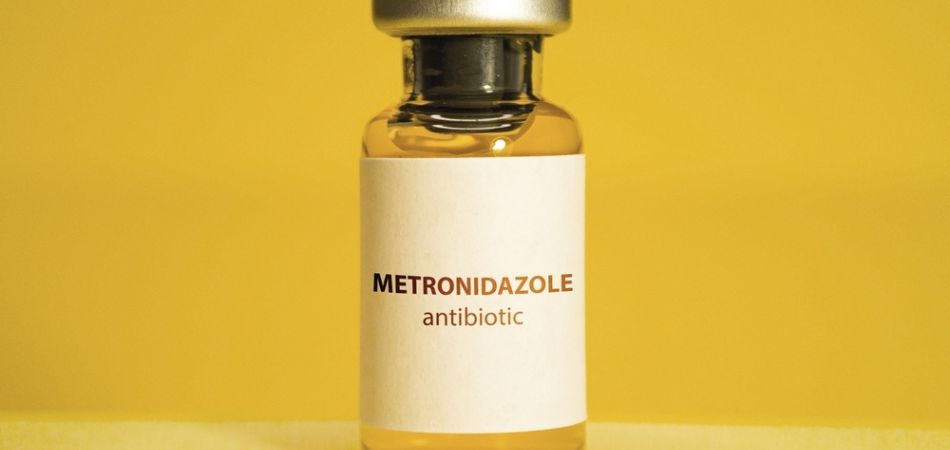
What is metronidazole used for?
Doctors prescribe metronidazole treatment for a wide range of infections, including bacterial vaginosis, trichomoniasis, infected gums and dental abscesses, and gut infections caused by bacteria that only thrive without oxygen. It works by precisely targeting the harmful bacteria, with a course usually running for about a week, or sometimes given as a single higher dose depending on what metronidazole is treating.
Can you drink alcohol with metronidazole?
The traditional metronidazole advice is still a firm no. The negative metronidazole alcohol interaction is usually put down to metronidazole blocking an enzyme that your liver needs to clear acetaldehyde. This is a toxic byproduct of alcohol, and when it isn’t cleared, acetaldehyde builds up in your blood.
The build-up is linked to a disulfiram-like reaction metronidazole is traditionally blamed for. Disulfiram is a drug given during alcohol treatment specifically to make drinking feel unpleasant. Even one drink is reported to set off metronidazole and alcohol symptoms, which can include nausea, vomiting, stomach cramps, flushing, a headache, dizziness, and a fast or irregular heartbeat, usually starting soon after drinking.
Where some experts now disagree about metronidazole and drinking
Some evidence behind the metronidazole reaction to alcohol may not be as strong as previously thought. Looking back at the original case reports the warning was built on, some experts now believe the doctors who wrote them up assumed the reaction was real without actually proving it. A couple of the cases were serious, but the cause being mixing metronidazole and alcohol was fully established.
A later trial gave healthy volunteers real alcohol after taking metronidazole under controlled conditions, and found no difference in the enzyme involved and no symptoms compared with people given a dummy pill. A more recent look specifically at people who had been drinking and taking metronidazole together found no cases of the reaction at all.
That doesn’t mean the reaction can never happen and you shouldn’t take it as a green light to drink while taking metronidazole. Doctors may be less certain about it than before, but the safest move is still to leave alcohol alone during treatment.
Other reasons to avoid drinking alcohol while taking metronidazole
The problems from taking metronidazole and drinking aren’t only the potential disulfiram-like effects. You’re also dealing with an infection, and infections already leave you dehydrated, tired, and off your food. Alcohol adds to all three. You need to give your body everything it needs to clear the infection and heal, but if you’re drinking, you’re adding unnecessary work which can slow that down.
Reasonable metronidazole safety measures
You give your body the strongest chance of clearing the infection completely by taking metronidazole exactly as prescribed, and that means finishing the whole course even once the symptoms ease. If you stop early, or skip a dose so you can drink on a particular night, you leave bacteria behind that have the chance to adapt, making the infection harder to treat the second time round.
The traditional warning may be stricter than it possibly needs to be, but that’s not a guarantee you’ll be fine, and there’s no way of knowing in advance. Basic metronidazole precautions mean taking it at the times you’re told, not doubling up if you miss a dose without checking first, and telling your GP about any other medication you’re on.
Some liquid medicines, cough syrups and laxatives among them, can also contain up to 10 percent alcohol. That’s not usually enough to cause a reaction on its own, and most people taking metronidazole won’t need to give it a second thought. But if you’re already being careful and taking several medicines at once, check the label, or ask your GP or pharmacist.
How long after metronidazole can I drink?
For tablets, liquid or suppositories, the NHS advises a two-day wait once you’ve finished the course before drinking so your body has to clear the drug properly. Vaginal gel is less well understood, and though it can sometimes cause the same effects, the risks appear lower than with tablets. Skin cream or gel is different because your body absorbs only a small amount of it, so there’s much less to worry about. If you’re not sure which category your medication falls into, or you’re on more than one form, ask your pharmacist or your GP.

When symptoms need medical attention
Most metronidazole side effects settle down without needing anything more than time and water. But if you’ve been drinking and start feeling properly unwell afterwards, don’t wait it out. A possible metronidazole reaction to alcohol can feel like a hangover, so people often dismiss real warning signs.
Get medical help straight away for difficulty breathing, severe chest pain, fainting or blacking out, or any reaction that feels far beyond what a hangover normally involves. These are the red flags, and though they’re rare, they need proper assessment and care.
What if you’ve already had a drink?
If you’ve already mixed metronidazole and drinking, don’t have any more tonight, and keep an eye on how you feel over the next few hours. Most people who react at all get through it with nothing worse than feeling a bit grim for a while. However, the reaction often doesn’t reflect how much you drank, so there’s no safe amount to bank on once you’ve had a drink. Carry on with your course unless your doctor says otherwise, and if any of the red flags above appear, get checked out.
Alcohol and antibiotics don’t all behave the same
The interactions between alcohol and antibiotics vary from medication to medication. For example, nitrofurantoin, a common antibiotic for urine infections, doesn’t carry anything like the same warning. It’s important to check the specific medicine you’ve been given, rather than treating all antibiotics and alcohol the same.
This is also true for alcohol and medication in general, with combinations such as mixing amitriptyline and alcohol carrying their own risks. However, the best advice when you’re sick is usually to avoid alcohol, and to ask your doctor if you’re not sure if drinking is safe.
If avoiding alcohol has felt harder than it should
A couple of days off drinking shouldn’t be a big ask for most people. But if it’s felt like more of a struggle than you expected, it could tell you something about your relationship with alcohol.
If this is the case, Banbury Lodge can help you make sense of it. We have residential alcohol addiction treatment centres across the UK. We provide alcohol detox programmes, structured rehab, and support that continues long after you finish treatment. Get in touch, and we’ll help you work out what’s going on and what support might fit.
(Click here to see works cited)
- National Health Service. “About Metronidazole.” NHS, www.nhs.uk/medicines/metronidazole/about-metronidazole/.
- National Health Service. “Trichomoniasis.” NHS, https://www.nhs.uk/conditions/trichomoniasis/.
- National Health Service. “Common Questions about Metronidazole.” NHS, www.nhs.uk/medicines/metronidazole/common-questions-about-metronidazole/.
- National Health Service. “Antibiotics – Interactions.” NHS, www.nhs.uk/medicines/antibiotics/interactions/.
- Mergenhagen, Kari A., et al. “Fact versus Fiction: A Review of the Evidence behind Alcohol and Antibiotic Interactions.” Antimicrobial Agents and Chemotherapy, vol. 64, no. 3, 2020, e02167-19, doi.org/10.1128/AAC.02167-19.
- Williams, Caroline S., and Kevin R. Woodcock. “Do Ethanol and Metronidazole Interact to Produce a Disulfiram-Like Reaction?” Annals of Pharmacotherapy, vol. 34, no. 2, 2000, pp. 255–257, doi.org/10.1345/aph.19118.
- Feldman, Ryan, and Rachael Jaszczenski. “Can Metronidazole Cause a Disulfiram-Like Reaction? A Case-Control Study Propensity Matched by Age, Sex, and Ethanol Concentration.” WMJ, vol. 122, no. 3, 2023, pp. 171–177, wmjonline.org/122no3/feldman/.

