





Written by:

Medically Reviewed by:
Last Updated:
August 5th, 2026
Cannabis addiction
While it is often viewed as harmless or non-addictive, the clinical evidence presents a far more nuanced reality. Cannabis use disorder is a recognised medical condition, and for many regular users, cannabis can lead to psychological dependence, cognitive impairment and a decline in mental health.
The nature of cannabis itself has also shifted over time. Modern forms, particularly high-potency variants such as skunk, are significantly stronger than those seen in previous generations. Increased levels of THC have heightened the associated risks, especially for younger individuals whose brains are still developing.
A clear understanding of what cannabis is, how it affects both the brain and body, when use crosses into addiction, and what recovery involves is essential. This knowledge is vital not only for those experiencing difficulties with cannabis but also for anyone supporting a loved one through it.
What is Cannabis?
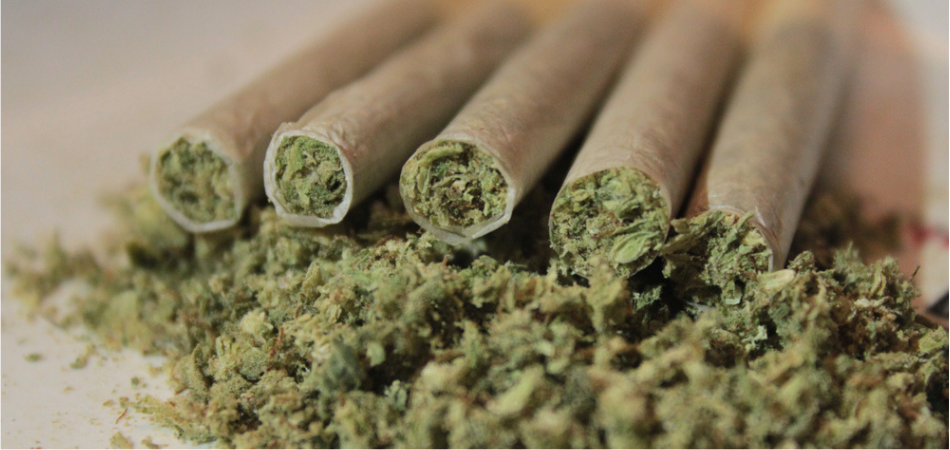
Cannabis is a psychoactive drug derived from the plant Cannabis sativa, Cannabis indica, or hybrid varieties. It is a Class B controlled substance in the United Kingdom, meaning that possession carries a penalty of up to five years in prison, and supply up to 14 years.
Cannabis contains over 100 naturally occurring chemical compounds called cannabinoids. The two most pharmacologically significant are:
- Delta-9-tetrahydrocannabinol (THC): the primary psychoactive compound responsible for the “high”, altered perception, euphoria, and, with high doses or prolonged use, anxiety and psychotic symptoms.
- Cannabidiol (CBD): a non-psychoactive cannabinoid that does not produce intoxication and may modulate some of THC’s effects. CBD is the basis of several licensed medicinal cannabis preparations.
The balance between THC and CBD in a cannabis product plays a central role in shaping both its effects and its risks. Varieties that are high in THC and low in CBD, which now dominate much of the UK’s illicit market, are associated with a far greater risk of psychological harm, dependence and psychosis. In contrast, cannabis with a more balanced cannabinoid profile tends to present a lower overall risk.
Cannabis Forms and Methods of Use
Cannabis is available in several forms and is consumed in a variety of ways, each with different onset times, intensity of effect, and risk profiles:
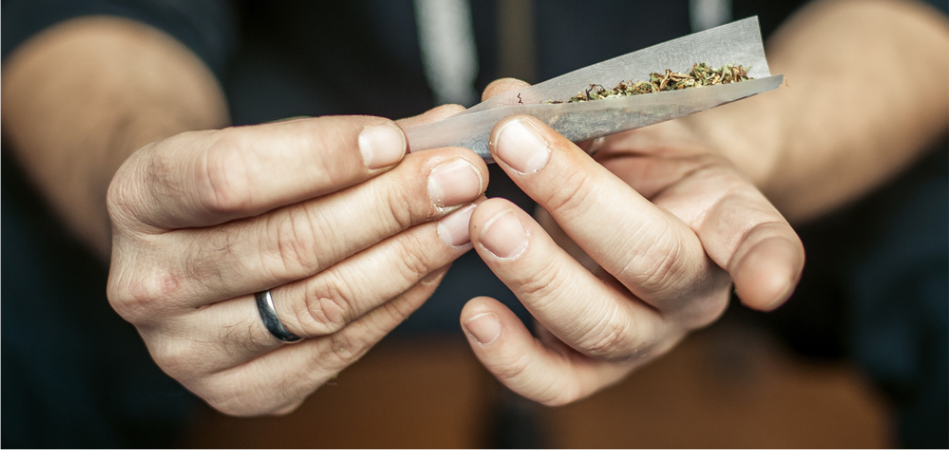
- Herbal cannabis (weed, skunk, bud): the dried flowers, leaves, and stems of the plant, typically smoked in a hand-rolled cigarette (joint), a pipe, or a bong. This is the most common form in the UK.
- Cannabis resin (hash): a compressed block made from the resin of the cannabis plant. Generally lower in THC than modern herbal cannabis, but still psychoactive.
- Cannabis oil and concentrates: highly concentrated cannabis extracts including wax, shatter, and oil (“dabs”), which can contain THC concentrations of 60–90%, vastly exceeding traditional herbal cannabis.
- Edibles: cannabis infused into food or drink. The onset is slower (30 minutes to 2 hours) but the effects are often more intense and prolonged, and the delayed onset makes accidental overconsumption common.
- Vaping: cannabis oil or flower heated and inhaled as vapour. Increasingly common, particularly among younger users, and associated with rapid onset and high-THC delivery.
The method of use significantly affects how quickly cannabis reaches the brain, how intense the effects are, and how the risk of dependence and harm is distributed. Smoking and vaping produce near-immediate effects (within minutes), while edibles carry a distinct risk profile due to unpredictable dosing and delayed onset.
Recovery creates space for new beginnings
We’ve seen it thousands of times.
Thousands of people have trusted us to help them overcome Cannabis dependency through expert care, immediate access to treatment, and a recovery plan designed around them.
Potency and the Modern Cannabis Landscape
One of the most important and frequently misunderstood aspects of modern cannabis use is the sharp rise in potency over recent decades. Research shows a marked increase in average THC levels in UK herbal cannabis, with many commonly available strains now containing between 15 and 25 percent THC or more. Some concentrated products exceed 80 percent THC.
This shift has significant clinical and social implications. Much of the earlier research that shaped perceptions around cannabis safety and its perceived lack of addictive potential was based on products containing just 2 to 4 percent THC. Comparing those to today’s high-potency cannabis is, in practical terms, similar to comparing a low-strength alcoholic drink to spirits. The risks of psychosis, dependence, cognitive impairment and anxiety are considerably higher with these stronger products than with the lower-strength cannabis that informed earlier public health messaging.
How Cannabis Works in the Brain
The Endocannabinoid System
The brain contains a naturally occurring system specifically responsive to cannabinoids: the endocannabinoid system (ECS). This system is one of the most widespread neurotransmitter networks in the body, with cannabinoid receptors (CB1 and CB2) found throughout the brain and nervous system, as well as in immune tissues, the gut, and reproductive organs.
The ECS plays a fundamental role in regulating a remarkably broad range of physiological processes, including:
- Mood, emotional processing, and anxiety regulation
- Memory formation and consolidation
- Appetite and metabolism
- Pain perception and the inflammatory response
- Sleep cycles and circadian rhythm
- Reward processing and motivation
- Neurodevelopment ( particularly significant during adolescence and young adulthood)
The ECS achieves this regulation through endogenous cannabinoids, naturally occurring molecules the brain produces itself, most notably anandamide (sometimes called the “bliss molecule”) and 2-arachidonoylglycerol (2-AG). These chemicals act as neuromodulators, fine-tuning communication between neurons in a precise, on-demand manner.
How THC Hijacks the Endocannabinoid System
When cannabis is consumed, THC enters the bloodstream and rapidly crosses the blood-brain barrier. Once in the brain, THC mimics the body’s natural endocannabinoids and binds to CB1 receptors, but it does so far more broadly, persistently, and powerfully than natural endocannabinoids ever would.
Unlike anandamide, which is produced locally and degraded within seconds, THC floods CB1 receptors across multiple brain regions simultaneously and remains active for hours. This indiscriminate, sustained activation disrupts the precise regulatory function of the ECS across all the systems it governs: mood, memory, appetite, motivation, pain, and sleep at once.
The key brain regions affected by THC and their consequences include:
Neuroadaptation: How the Brain Changes with Regular Cannabis Use
With repeated cannabis exposure, the brain adapts to the sustained presence of THC in ways that establish tolerance and dependence, and that can persist long after cessation.
Downregulation of CB1 receptors
Chronic THC exposure causes a significant reduction in the number and sensitivity of CB1 receptors throughout the brain, a process called downregulation. Fewer functional receptors means that more THC is needed to produce the same effect (tolerance), and that the brain’s natural endocannabinoid system becomes functionally impaired. This receptor downregulation is the neurobiological basis of cannabis tolerance and is associated with the withdrawal symptoms experienced when cannabis is stopped.
Disruption of dopamine signalling
Chronic heavy cannabis use is associated with a measurable reduction in the brain’s baseline dopamine activity. Over time, the reward system becomes blunted (unable to generate normal levels of pleasure, motivation, or reward from everyday activities). This manifests clinically as amotivational syndrome: a persistent state of low motivation, diminished interest in previously rewarding activities, emotional flatness, and difficulty engaging with life without cannabis. This dopamine deficit is also a significant driver of craving during abstinence.
Structural brain changes with heavy long-term use
Neuroimaging research has documented structural changes in the brains of long-term heavy cannabis users, particularly in the hippocampus, amygdala, and prefrontal cortex, the regions most densely populated with CB1 receptors and most critical to memory, emotion, and decision-making. These changes are more pronounced when use begins during adolescence, when the brain is still undergoing critical developmental processes and is at its most vulnerable to disruption.
What Cannabis Does to the Body
Cannabis affects the body across multiple systems, both acutely during intoxication and cumulatively with long-term heavy use. While cannabis lacks some of the acute organ toxicity of drugs like heroin or alcohol, chronic heavy use is associated with a range of significant physical health consequences.
- Cannabis smoke contains many of the same toxic chemicals and carcinogens as tobacco smoke, including tar, carbon monoxide, ammonia, and polycyclic aromatic hydrocarbons.
- Regular cannabis smoking is associated with chronic bronchitis, persistent cough, increased phlegm production, and frequent chest infections, at rates similar to tobacco smokers.
- Cannabis smokers tend to inhale more deeply and hold smoke in the lungs longer than tobacco smokers, maximising the deposition of harmful particles in the airways.
- Evidence links heavy long-term cannabis smoking with an elevated risk of chronic obstructive pulmonary disease (COPD) and impaired lung function, though the relationship is less clearly established than with tobacco.
- Cannabis smoking in combination with tobacco compounds all respiratory risks significantly and adds the dependence-forming properties of nicotine to the picture.
- Cannabis acutely increases heart rate (tachycardia), sometimes by 20–100% above baseline, and can raise blood pressure in the short term, increasing cardiac workload.
- Case reports and epidemiological studies have linked cannabis use with an elevated risk of myocardial infarction (heart attack), particularly in the hour immediately following use in individuals with pre-existing coronary artery disease.
- Regular cannabis use is associated with an increased risk of stroke in young adults, though the precise mechanisms are still being investigated.
- Cannabis-associated arteritis, a rare but serious condition involving inflammation of blood vessels in the extremities, has been documented in young, otherwise healthy cannabis users.
- Regular cannabis use in men is associated with reduced sperm quality, including reduced count, motility, and morphological abnormalities, and may contribute to male infertility.
- Cannabis use during pregnancy is associated with a range of risks to the developing foetus, including low birth weight, preterm birth, and developmental difficulties. THC crosses the placenta and is also present in breast milk.
- Adolescent cannabis use is associated with significantly elevated risks of psychiatric disorder, cognitive impairment, and dependence compared to adult initiation. The earlier the age of first use, the more pronounced these effects.
- Cannabis use during adolescence has been linked to reduced educational attainment, earlier school leaving, and reduced occupational achievement, outcomes that reflect both the direct cognitive impact of THC on the developing brain and the behavioural consequences of regular drug use during formative years.
- CB2 receptors, found predominantly on immune cells, mediate cannabis’s effects on immunity. THC has been shown to suppress certain immune responses, potentially impairing the body’s ability to fight infection.
- Regular cannabis use is associated with an increased susceptibility to respiratory infections, both from the direct airway damage of smoking and from THC’s immunosuppressive effects.
- Conversely, the anti-inflammatory properties of cannabinoids are the basis for several licensed medicinal cannabis applications, illustrating the nuanced and dose-dependent nature of cannabis’s immunological effects.

Your Cannabis-free future
starts with one phone call.
Cannabis Use Disorder and Understanding Addiction
One of the most persistent myths surrounding cannabis is that it is not addictive. This belief is medically and scientifically inaccurate. Cannabis use disorder (CUD) is a formally recognised condition in both the DSM-5 and ICD-11, two of the primary diagnostic frameworks used in psychiatry, and affects a significant proportion of regular cannabis users.
Research indicates that around 9 percent of people who try cannabis will develop dependence. This risk increases to approximately 17 percent for those who start using in adolescence, and rises further to about 50 percent among daily users. In the United Kingdom, cannabis is the most common drug for which people seek treatment, representing the largest proportion of drug treatment referrals after alcohol.
Why Cannabis Addiction is Often Underrecognised
Cannabis addiction is frequently missed, both by individuals themselves and by those around them, for several reasons:
- The absence of dramatic acute intoxication (cannabis does not typically produce the obvious behavioural disruption of alcohol
- or heroin intoxication) makes dependence less visible.
- Withdrawal symptoms, while clinically significant, are primarily psychological rather than physically dangerous, and may be mistaken for anxiety, depression, or simply “being stressed”.
- Cultural normalisation of cannabis use, amplified by debates around decriminalisation and legalisation, creates a social environment in which heavy use is minimised or excused.
- Many dependent users are high-functioning in some domains of life, maintaining employment or relationships for a time, which obscures the progressive harm being caused.
The clinical picture of cannabis use disorder is one in which the individual has lost control over their use, continues to use despite recognising the harm, organises their life around obtaining and using cannabis, and experiences significant psychological and functional distress when they try to stop.
For individuals who have developed dependence, a structured cannabis detox may be the first step in recovery. Detox focuses on managing withdrawal symptoms such as irritability, sleep disturbance and anxiety within a safe and supportive environment.
Signs and Symptoms of Cannabis Addiction
Recognising cannabis addiction requires attention to a distinctive combination of psychological, behavioural, and physical changes.
Psychological and Behavioural Indicators
- Inability to control or stop use: Despite wanting to cut down or quit, the individual repeatedly returns to cannabis. Failed attempts at self-managed abstinence are common and clinically significant.
- Using cannabis to cope with emotions: Cannabis becomes the primary, or only, way the individual manages stress, anxiety, boredom, sadness, or discomfort. The capacity for natural emotional regulation atrophies with disuse.
- Preoccupation with obtaining and using cannabis: Significant time and mental energy is devoted to ensuring supply, planning use, and recovering from use. Other activities and priorities are displaced.
- Continuing to use despite known harm: The individual acknowledges that cannabis is negatively affecting their mental health, relationships, motivation, or cognitive function, but feels unable to stop.
- Tolerance (needing more to achieve the same effect): Escalating amounts are required to produce the effect that smaller quantities once achieved.
- Withdrawal symptoms when not using: Irritability, anxiety, sleep disturbance, appetite changes, and restlessness appearing predictably within 24–72 hours of stopping use indicate physical dependence.
- Neglect of responsibilities and interests: Work performance, academic achievement, hobbies, and social relationships deteriorate as cannabis use becomes the dominant organising factor in the individual’s life.
Physical Indicators
- Red or bloodshot eyes: A characteristic sign of cannabis intoxication, caused by THC-induced dilation of blood vessels in the conjunctiva.
- Increased appetite and weight gain: THC stimulates appetite strongly via hypothalamic CB1 receptors, the basis of the well-known “munchies”, which can contribute to unhealthy eating patterns and weight changes with regular use.
- Chronic cough and respiratory symptoms: Persistent coughing, increased mucus production, and frequent chest infections in those who smoke cannabis regularly.
- Psychomotor slowing: Reduced reaction time, slowed speech and movement, and impaired coordination are observable even when the individual does not feel subjectively intoxicated in heavy long-term users.
- Poor sleep: While cannabis is frequently used to aid sleep, chronic use suppresses REM sleep. Upon cessation, a rebound of vivid dreams and insomnia is common and is one of the more distressing features of cannabis withdrawal.
Mental Health and Cannabis Addiction
The relationship between cannabis and mental health is one of the most extensively researched — and most clinically significant — aspects of cannabis use disorder. There is now a substantial and convergent body of evidence linking heavy, prolonged cannabis use with a range of serious mental health outcomes.
Key findings from the research base include:
- People who use cannabis are approximately twice as likely to develop a psychotic disorder compared to non-users; daily users face an approximately five-fold increased risk.
- Use of high-potency cannabis (skunk) is associated with a substantially greater risk of psychosis than use of lower-potency forms.
- Marijuana use in adolescence, when the brain is undergoing critical development, confers the highest risk of subsequent psychotic disorder.
- THC directly induces transient psychotic symptoms (paranoia, hallucinations, thought disorganisation) even in healthy individuals at sufficient doses, illustrating its mechanistic role in psychosis.
- In individuals with a genetic predisposition to psychosis or a personal or family history of psychotic disorder, cannabis use may precipitate the onset of psychotic illness significantly earlier than would otherwise have occurred.
The proposed mechanism involves THC’s dysregulation of the dopamine system in the mesolimbic pathway, the same pathway involved in schizophrenia, combined with disruption of CB1-mediated GABAergic inhibition in the prefrontal cortex, producing the loss of cognitive and perceptual filtering that characterises psychotic states.
- Acute high-dose cannabis misuse reliably induces anxiety, paranoia, and in some cases, full panic attacks, particularly with high-THC products and in inexperienced users.
- Chronic cannabis use leads to a hypersensitised stress response, meaning that when the drug is not present, anxiety levels are elevated above baseline, a neurochemical rebound driven by CB1 receptor downregulation.
- Long-term cannabis use is associated with the development of generalised anxiety disorder and social anxiety disorder, creating a damaging cycle in which cannabis is used to manage anxiety it has itself generated.
Short-Term Effects of Cannabis Use
The immediate effects of cannabis vary depending on potency, individual sensitivity, and route of administration, but commonly include:
- Euphoria, relaxation, and heightened sensory perception
- Altered perception of time and space
- Impaired short-term memory and concentration
- Increased appetite
- Dry mouth, red eyes, and increased heart rate
- At higher doses: anxiety, paranoia, disorientation, and in some cases, hallucinations or acute psychotic symptoms
- Impaired coordination and reaction time
Long-Term Health Consequences of Cannabis Use Disorder
- Cognitive impairment: persistent difficulties with memory, attention, processing speed, and executive function, more pronounced and potentially longer-lasting when use begins in adolescence
- Psychiatric disorders: elevated risk of psychosis, schizophrenia, anxiety disorders, and depression with heavy or long-term use
- Chronic respiratory disease: bronchitis, increased susceptibility to respiratory infections, and potential contribution to COPD with prolonged smoking
- Cardiovascular risks: elevated risk of heart attack and stroke, particularly in those with pre-existing conditions
- Amotivational syndrome: a pervasive reduction in motivation, engagement, and goal-directed behaviour reflecting dopaminergic dysregulation
- Cannabinoid hyperemesis syndrome (CHS): CHS is a poorly understood but well-documented condition affecting some heavy long-term cannabis users, characterised by cycles of severe nausea, vomiting, and abdominal pain that are paradoxically relieved by hot bathing. CHS often goes undiagnosed for years and resolves only with complete cessation of cannabis use.
- Impaired reproductive health and foetal development with use during pregnancy
- Gateway effects: while not universal, heavy cannabis use, particularly in adolescence, is associated with an increased likelihood of subsequent use of other substances
Recovery and Support at Banbury Lodge
With the right support, many people regain mental clarity, emotional balance and a renewed sense of purpose. The brain has a strong capacity to recover once cannabis use stops, and lasting improvements are common with sustained abstinence.
At Banbury Lodge, we provide a comprehensive, evidence-based cannabis treatment programme specifically designed to address both the physical and psychological dimensions of cannabis use disorder, and to treat any co-occurring mental health conditions that have developed alongside or predated the addiction.
If cannabis is beginning to take more than it gives, now is the time to act. Reach out to Banbury Lodge and take the first step towards lasting recovery.
A healthier, Cannabis-free life is possible, and it starts here
Whether this is your first step or support following a relapse, we provide expert care at every stage of recovery in a safe and supportive setting.
Frequently asked questions
(Click here to see works cited)
- NHS (2024). Cannabis: the facts. NHS.uk.
- National Institute on Drug Abuse (NIDA) (2020). Cannabis (Marijuana) Research Report. U.S. Department of Health and Human Services.
- Di Forti, M. et al. (2019). The contribution of cannabis use to variation in the incidence of psychotic disorder across Europe (EU-GEI): a multicentre case-control study. The Lancet Psychiatry, 6(5), 427–436.
- Volkow, N. D. et al. (2016). Effects of cannabis use on human behaviour, including cognition, motivation and psychosis. JAMA Psychiatry, 73(3), 292–297.
- Freeman, T. P. et al. (2019). Medicinal use of cannabis based products and cannabinoids. BMJ, 365, l1141.
- Public Health England (2019). United Kingdom Drug Situation 2019. PHE Publications.
- Haney, M., & Evins, A. E. (2016). Does cannabis cause, exacerbate or ameliorate psychiatric disorders? Neuropsychopharmacology, 41(2), 393–401.
- European Monitoring Centre for Drugs and Drug Addiction (EMCDDA) (2023). Cannabis: drug profile. EMCDDA.
- NHS (2024). Getting help for drug addiction. NHS.uk.

