




Last Updated:
July 15th, 2026
What causes chest pain after drinking?
If you’ve experienced chest pain during or after drinking, your mind probably went straight to the worst-case scenario. That’s a natural response, and the anxiety that comes with it can actually make the sensation feel worse. But chest pain after alcohol doesn’t always mean something catastrophic is happening.
There are several reasons it can occur, and understanding them can help you figure out whether it’s something to monitor or something that needs immediate attention.
Research shows that alcohol damages the tissue resistance of the oesophageal lining and impairs the motility that normally helps clear acid from the oesophagus, making it more vulnerable to injury.
If you have an underlying heart condition you may not be aware of, these effects can be more pronounced.
This is one of the reasons chest pain after drinking can feel so alarming, because the symptoms can overlap with what you’d expect from a genuine cardiac event.
The pain from dehydration-related chest discomfort tends to be mild, but it can feel alarming when it’s happening, especially if it’s paired with dizziness or lightheadedness. This is also one of the reasons chest pain can appear the morning after drinking, when dehydration is at its peak.
Additional Read: How alcohol changes your features
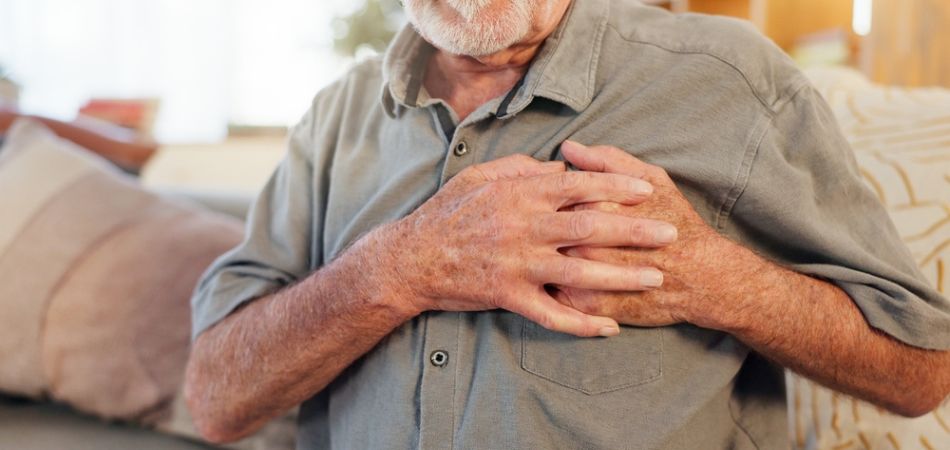
Could chest pain after drinking be something more serious?
In most cases, chest pain after drinking is linked to something like acid reflux or dehydration, both of which tend to resolve on their own. But there are situations where the pain can point to something that needs medical attention, and being aware of those possibilities is important.
Long-term heavy drinking can lead to a condition called alcoholic cardiomyopathy, where the heart muscle weakens and struggles to pump blood effectively.
Research indicates that consuming more than 80g of alcohol per day (roughly 5 to 6 standard drinks) for at least five years significantly increases the risk of developing this condition.
Symptoms can include chest pain and shortness of breath, and it’s one of the leading causes of non-ischemic dilated cardiomyopathy.
Heavy alcohol consumption can also trigger acute pancreatitis, which is inflammation of the pancreas. The pain from pancreatitis can radiate to the chest and is typically severe, worsening after eating or drinking. It may also be accompanied by nausea and intense abdominal pain.
Pancreatitis requires medical treatment and shouldn’t be something you try to manage at home.
When to seek medical attention for chest pain after drinking
Not every instance of chest pain after drinking requires a trip to A&E, but there are certain signs that should never be ignored. If you experience any of the following, seek medical help immediately:
- Severe chest pain that does not ease
- Chest pain that spreads to your arm
- Shortness of breath
- Nausea
- Sweating
- A racing heartbeat that does not settle
These could be signs of a cardiac event or another serious condition that requires urgent assessment. If you’re unsure, it’s always better to get checked than to wait and see.

How to reduce the risk
If you’ve noticed that chest pain is becoming a recurring issue after drinking, there are some practical steps you can take to reduce the likelihood of it happening. Below, we take a look at some of the most important steps you can take
- Staying hydrated while you drink makes a difference because it counters the diuretic effect of alcohol and helps maintain your electrolyte balance.
- Avoiding lying down too soon after drinking can also help, as being horizontal makes it much easier for stomach acid to travel back up into the oesophagus.
- Eating lighter meals rather than heavy or spicy food alongside alcohol reduces the strain on your digestive system
- Keeping track of when the pain occurs and what you were drinking can help you identify patterns and triggers.
If the pain keeps returning despite these adjustments, that’s a sign your body is telling you something, and it’s worth speaking with your GP.
What if cutting down on alcohol feels too difficult?
If you’ve read through the advice above and the idea of reducing or stopping drinking feels like it’s not something you can do right now, that’s a feeling worth paying attention to.
Difficulty cutting back is one of the clearest indicators that alcohol may have a stronger hold on you than you realised, and it’s something that affects people from all backgrounds and circumstances.
If you suspect this, it’s vital to check in on yourself and your relationship with alcohol. One of the best ways you can do this is by answering the following questions as honestly as you can:
- Do you think about your next drink during the day?
- Do you feel uncomfortable when you haven’t had a drink for a while?
- Have you tried to cut down on alcohol but couldn’t stick to it?
- Do you drink more than you planned once you start?
- Do you use alcohol to cope with stress?
- Have you experienced withdrawal symptoms when you stop drinking?
Answering ‘yes’ to any of these questions doesn’t automatically mean that you have an issue with alcohol and they’re certainly not acting as a diagnostic tool. But by answering ‘yes’, it opens the door to a conversation with a professional who understands addiction and can provide guidance on the next steps.
Taking the next step
If you’re concerned about your drinking and it’s starting to affect your health, Banbury Lodge can help. Our team provides personalised treatment for alcohol addiction, from medically supervised detox through to therapy and ongoing aftercare.
Regardless of whether you’re ready to take action or you just want to understand your options, we’re here to have that conversation.
Calling us doesn’t commit you to anything and our only aim is to give you access to the kind of guidance that can be difficult to find on your own. Contact Banbury Lodge today for a conversation about your next steps.
(Click here to see works cited)
- Bucan, J. I., Braut, T., Krsek, A., Sotosek, V., & Baticic, L. (2025). Updates in Gastroesophageal Reflux Disease Management: From Proton Pump Inhibitors to Dietary and Lifestyle Modifications. Gastrointestinal Disorders, 7(2), 33. https://doi.org/10.3390/gidisord7020033
- Chen, S., Wang, J., & Li, Y. (2010). Is alcohol consumption associated with gastroesophageal reflux disease? Journal of Zhejiang University SCIENCE B, 11(6), 423–428. https://doi.org/10.1631/jzus.b1000013
- Piano, M. R., & Phillips, S. A. (2014). Alcoholic cardiomyopathy: pathophysiologic insights. Cardiovascular Toxicology, 14(4), 291–308. https://doi.org/10.1007/s12012-014-9252-4
- Shaaban, A., Gangwani, M. K., Pendela, V. S., & Vindhyal, M. R. (2021). Alcoholic Cardiomyopathy. PubMed; StatPearls Publishing. https://www.ncbi.nlm.nih.gov/books/NBK513322/

