




Last Updated:
March 27th, 2026
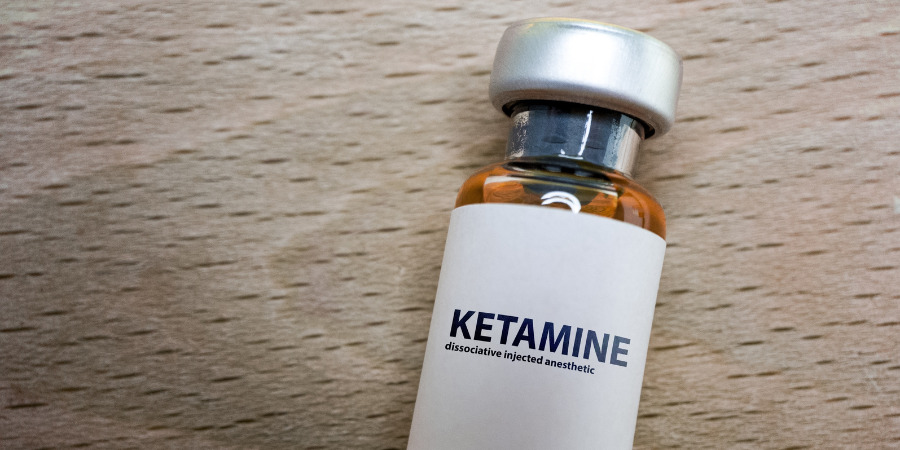
Ketamine used to be a niche drug. You may have seen it at festivals or in certain club scenes, but it wasn’t really mainstream. But that’s definitely changed. In 2024, an estimated 299,000 people in England and Wales reported using ketamine, the highest number on record. Ketamine’s popularity has really exploded among young people, with ketamine use by 16 to 24-year-olds almost five times higher than in 2013. Ketamine is cheap and easy to get hold of, and a lot of people assume it’s safer and than other drugs. But is growing ketamine popularity purely down to price and availability? And is it genuinely safer than other drugs?
Ketamine effects
Ketamine is a dissociative anaesthetic that, in medical settings, is used for pain relief and sedation. It has a reputation as being a “horse tranquiliser,” and it can be used for sedating animals. But recreational ketamine use happens because people are chasing its dissociative and hallucinogenic effects.
How powerful these effects are usually depends on how much ketamine you take. At lower doses, you get a floaty, detached feeling. Sounds seem distant, and colours look different. Your body feels lighter, or like it doesn’t quite belong to you. Time slows down or stops making sense altogether.
At higher doses, things can get far more intense. This is what people call a K-hole, a state of deep dissociation where you lose touch with your body and surroundings completely. It is a bit like going into an immersive and incredibly vivid dream state. Some people find this to be a profound experience, but it can also be absolutely terrifying. Whether it is a positive or negative experience, you can’t move or communicate, and have no idea how long it’s going to last.
Ketamine effects come on fast, especially if you snort it, and they wear off within an hour or so. That short duration is part of the appeal, because you can be back to normal relatively quickly with no obvious comedown or lingering effects. But this is also partly why people redose and why ketamine use can escalate.
What has driven ketamine popularity?
Recreational ketamine use has grown for several reasons. The biggest is probably cost. A gram of pure ketamine might set you back £10 to £20, and sometimes far less. Compare that to cocaine at £50 to £100, which, in many cases, has been cut with all kinds of unidentifiable substances.
Availability plays a role, too. Ketamine is easy to obtain, dealers sell it openly on social media platforms, and buying in bulk brings the price down even further.
There is also a perception that ketamine is somehow safer than other addictive drugs. It doesn’t make your heart race like stimulants do, doesn’t keep you up all night, and you can do it at home on the sofa, not just in a club. For a lot of young people, it has become a “chill out” drug rather than a party drug, something to take while watching a film or hanging out with mates.
And then there’s curiosity. Ketamine does something genuinely different. The dissociation, the sense of being somewhere else entirely, is an experience you can’t get from alcohol, cocaine, weed, or ecstasy. It can be an enjoyable high that you want to repeat, and even if you have a bad K-hole experience, it can quickly be forgotten as the effects wear off.
Medical uses of ketamine
But ketamine isn’t just a street drug. As explained above, it’s been used in hospitals for decades as an anaesthetic and painkiller, and is also used in some pain clinics for people with chronic pain conditions that haven’t responded to other treatments.
But more recently, ketamine has been explored as a treatment for depression. In all cases, the medical version works differently from recreational ketamine use. Doses are carefully controlled, and sessions are supervised, with treatment usually combined with therapy. Some private clinics in the UK now offer ketamine infusions for people with treatment-resistant depression, meaning they’ve tried other antidepressants without success.
A related drug called esketamine (sold as Spravato) was licensed in the UK in 2019 for treatment-resistant depression. It is a nasal spray given under medical supervision. NICE hasn’t approved it for routine NHS use because of the cost, so access is mostly through private clinics.
The evidence for ketamine as an antidepressant is promising but still limited. It seems to work fast, often within a few hours, but the effects don’t always last. Long-term data is still lacking.
What matters is that medical ketamine use happens in a controlled setting with professional oversight. That is completely different from buying powder from a dealer and taking it at home with no idea what’s in it or how much you’re actually using.

The risks of ketamine
The risks of ketamine are real and serious, especially with regular use.
The most well-known is bladder damage. Ketamine breaks down into chemicals that are toxic to the bladder lining, and if you use it often enough, you will damage the tissue. First comes inflammation, and then ulcers and scarring. In severe cases, the bladder shrinks so much that people need to urinate every few minutes, day and night. In the most serious examples, some end up needing their bladder surgically removed.
This isn’t rare anymore. In July 2025, Alder Hey Children’s Hospital opened the UK’s first NHS clinic specifically for under-16s with ketamine bladder damage. Children as young as 14 are coming in with symptoms that used to be seen only in long-term adult users.
As well as the bladder, ketamine misuse is linked to serious problems with thinking and memory, and some studies suggest heavy long-term users develop mild psychotic symptoms.
And then there is ketamine addiction itself. Ketamine can be both psychologically and physically addictive. You build tolerance, which means you need more to get the same effect. Use then becomes more frequent, until you are dependent on ketamine, and stopping feels impossible even when you want to.
The numbers tell the story. In 2014-15, 426 people entered treatment for ketamine addiction in England. In 2024-25, that number was over 5,300, more than twelve times higher. Ketamine-related deaths have also increased by 2,000% since 2014.
The Home Office is now considering reclassifying ketamine from a Class B to a Class A drug. That tells you how seriously the problem is being taken.
Signs you might need help
But how do you know when ketamine use has become a problem? Some signs that you may be addicted to ketamine include:
- Using more ketamine than you planned, or more often than you used to
- Having bladder symptoms like needing to urinate constantly, or pain and blood when you do.
- Trying to cut down but not being able to.
- Experiencing memory issues.
- Feeling detached or foggy even when you’re not using ketamine.
- Friends or family telling you they’re worried.
- Spending money you don’t have on ketamine.
- Ketamine going from something you do occasionally to the thing you look forward to most.
If any of this sounds familiar, you should take it seriously. Ketamine addiction doesn’t look the same as heroin or alcohol addiction, so people often don’t recognise it in themselves. But the damage is real, and the earlier you get help, the better the outcome.
How to get support
If ketamine has become a problem for you, Banbury Lodge can help. We offer ketamine rehab treatment support for people who want to stop but don’t know where to start. We know reaching out can be scary, but the first conversation is about understanding your situation, not pushing you towards anything.
Ketamine substance misuse awareness is growing, and so is the help available. You don’t have to figure this out alone. Contact Banbury Lodge today, and let’s work through this together.
(Click here to see works cited)
- Home Office. “Drug Misuse in England and Wales: Year Ending March 2024.” GOV.UK, 2024, gov.uk/government/statistics/drug-misuse-in-england-and-wales-year-ending-march-2024.
- Office for Health Improvement and Disparities. “Adult Substance Misuse Treatment Statistics 2024 to 2025: Report.” GOV.UK, 4 Dec. 2025, gov.uk/government/statistics/substance-misuse-treatment-for-adults-statistics-2024-to-2025.
- Primary Care 24. “The Rise of Ketamine Use in the UK.” 4 Aug. 2025, primarycare24.org.uk/news/2025/08/04/the-rise-of-ketamine-use-in-the-uk/.
- Pullen, Jade, et al. “Deaths Following Illicit Ketamine Use in England, Wales and Northern Ireland 1999–2024: An Update Report to Inform the Reclassification Debate.” Journal of Psychopharmacology, 2025, journals.sagepub.com/doi/10.1177/02698811251373058.

